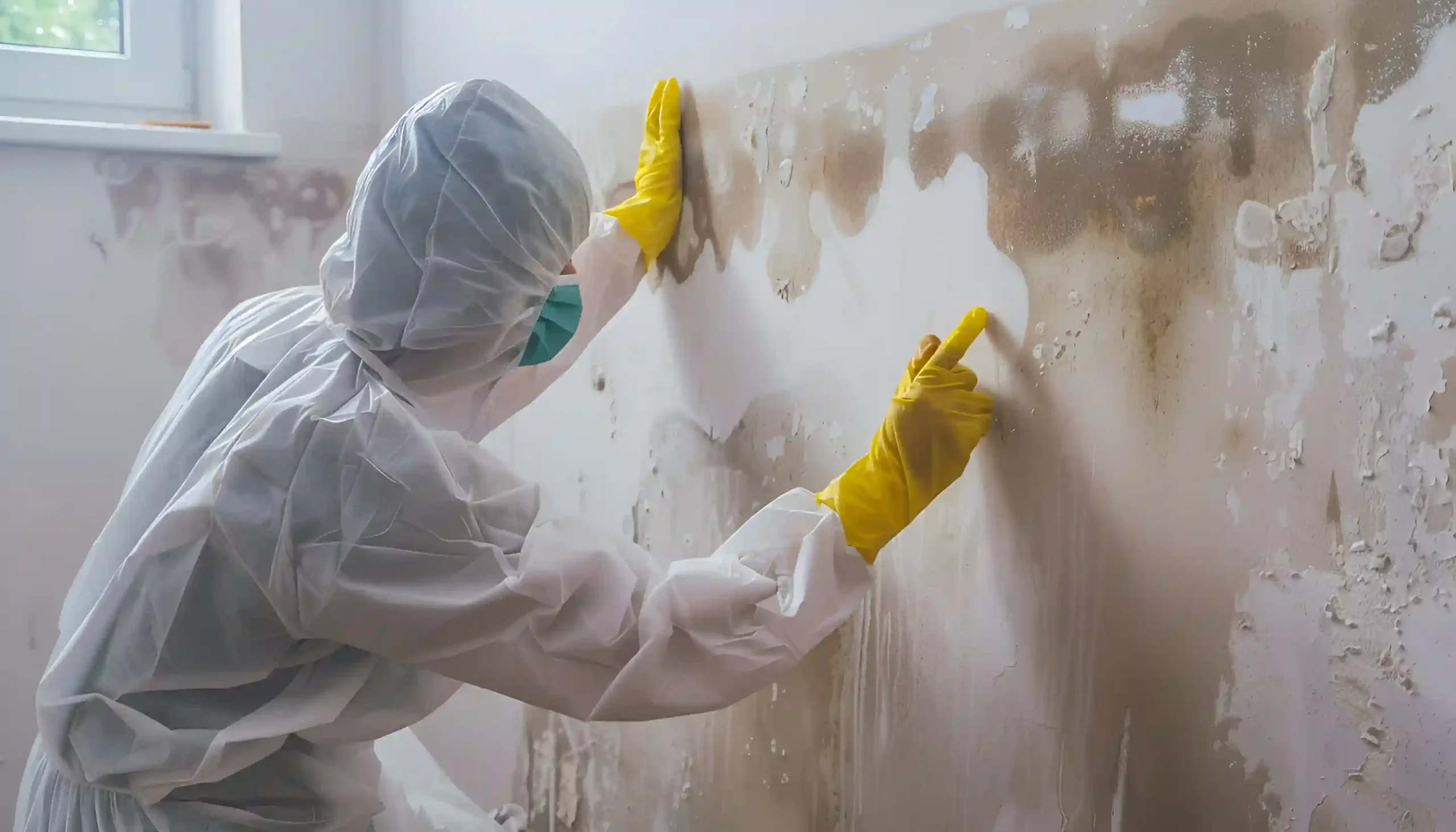
Water damage doesn’t just leave stains; it often creates the perfect conditions for mold to grow. Musty smells, discoloration, and damp walls are early warning signs, but you can’t always see the full extent of the problem.
Mold can spread quickly, damage your home, and cause serious health issues if left unchecked. In this blog, we’ll explain why testing for mold after water damage is so important, what to look for, and when it’s worth calling in the experts.
Why Mold Follows Water Damage
Mold spores are literally in every place, both outdoors and indoors. All they require to grow is a few things:
- Water (Moisture, water through leaks, etc.)
- A source of food (wood, dry wall, etc.)
- Warmth and time.
The EPA found that to prevent mold, wet or damp places must be dried in 24-48 hours.
Research indicates that many American households develop dampness or mold. Almost half the homes surveyed report mold or some dampness or water damage.
If your home has experienced water damage, the threat is genuine. It does not necessarily imply the presence of visible mold, but it implies that it could be growing invisibly, thus the rationale behind mold testing after water damage.
What are the Signs of Mold after Water Damage
Before testing, you can look for signs of mold after damage. These can help you establish that testing is inevitable:
- Smelly rooms, clothes and basements.
- Discoloration and dark patches on walls, ceiling, floor and baseboards.
- Swelling or peeling paint or wallpaper.
- Warped wood or sagging drywall.
- Health symptoms, such as allergies, asthma exacerbation, and cough.
- Areas remaining damp or lingering moisture.
Mold may be growing already, if you notice any of the above. Occasionally however, the wall hides the mold, beneath flooring, or in hard-to-reach areas.
When Should You Conduct Mold Testing after Water Damage
Testing would be advisable in the following cases:
The extent of damage is large
When there is water damage over a large space, the flooring, and walls are soaked in water, then the testing will help in determining whether there is mold or there is a possibility of it.
You see or smell mold
In the event of visible spots, musty odors, or sudden illnesses among inmates, a test will provide a thorough indication of the seriousness of the issue.
You suspect hidden mold
Perhaps it is water that seeped into wall cavities, floors, and cabinets. You can’t see it. Mold can be located both in materials and in the air.
You plan to fix or renovate
You may be planning to replace building materials that are damaged or conduct renovations and the testing allows you to plan how to deal with mold or how much remediation may be needed.
Insurance or legal reasons
As a matter of fact, sometimes policies require extensive documentation. When you are required to demonstrate the level of mold to claim insurance or to comply with building/health codes, professional post-water mold testing gives you that report.
What Does Mold Testing Include
Here’s what you can expect if you move on with mold testing after damage:
- Visual observation: Inspectors examine surfaces, stamps, and damp spots.
- Measuring humidity: instruments used in measuring the humidity on walls, floors, and ceilings. Where the materials are wet, there is a high probability of mold.
- Air sampling: It involves collecting air samples to determine mold spores in air. This may indicate mold, even if it hasn’t actually manifested anywhere.
- Surface sampling: A swab or tape lift of the surface to investigate mold types.
- Laboratory testing: The samples are analyzed, mold species (e.g., Aspergillus, Penicillium, Stachybotrys)are determined, and the number of spores is counted.
Professional testers provide a report outlining what was found, how unsatisfactory it is, how to fix it, and sometimes cost estimates.
Real-World Example
Let’s share the story of Brandi Schmitt’s family in Maryland. Water started pouring into their house after a tornado tore off their roof. At the start, mold tests did not show high levels. However, months later, a follow-up test was required due to visible moisture, the presence of mold, and breathing difficulties. The test showed problematic levels of mold. The case went to court, and the family won the case against the insurance company.
This tale reveals that there are two things: first, the presence of mold might not be noticeable at once when it is damaged by water, and second, that testing will reveal issues that are not evident immediately. It further points out that insurance companies will not necessarily cover the mold without evidence.
Costs, Risks, and What if No Mold is Detected
Mold testing after water damage isn’t free. Professional testing of mold may cost $300-$400, depending on the size of the house, the number of samples collected, and the extent of the mold.
There may be some downsides to it:
- Even if no mold is detected, it does not necessarily mean zero risk. It could indicate that there are low levels of mold below the lab’s threshold, or mold may be present in untested areas.
- It can give a false positive (there are dead spores, spores from outside, etc.).
- Testing without remediation does not address the problem. You should also repair sources of moisture and remove or clean mold.
What to Do After Testing
If mold is found:
- End the cause of moisture (leaks, flooding, humidity control).
- If moderate or high-grade mold growth occurs, remove and remediate affected materials (drywall, carpeting, insulation).
- Clean and dry with good ventilation, dehumidifiers, and drying equipment.
- Hire skilled mold remedial workers.
- Maintain good documentation (photos, lab, etc), particularly where you may make claims with insurance.
When mold is not detected, but you still feel that there is a cause of concern, keep an eye on the area and proceed with drying and retests should symptoms persist or reappear.
Conclusion
Should mold be tested in case of water damage? In many situations, yes. Particularly when the damage is vast, you notice or smell mold or experience health issues, or when hidden areas might be affected. Remember, it can take mold as short as 24-48 hours of water exposure to start growing.
Testing gives you clarity. It makes you behave smartly instead of speculating. It may avoid larger losses, protect your health, and cover insurance or lawsuits. Don’t leave mold to chance. If your house has been damaged by water, let Top To Bottom Services do the work on your behalf. We have qualified people who provide professional mold testing, post water damage, complete inspection, and remediation that suits your needs. We assist in making you notice the early signs of mold, repair the source of the problem, and rebuild your house without putting your life at risk.
Call now to book a mold inspection.