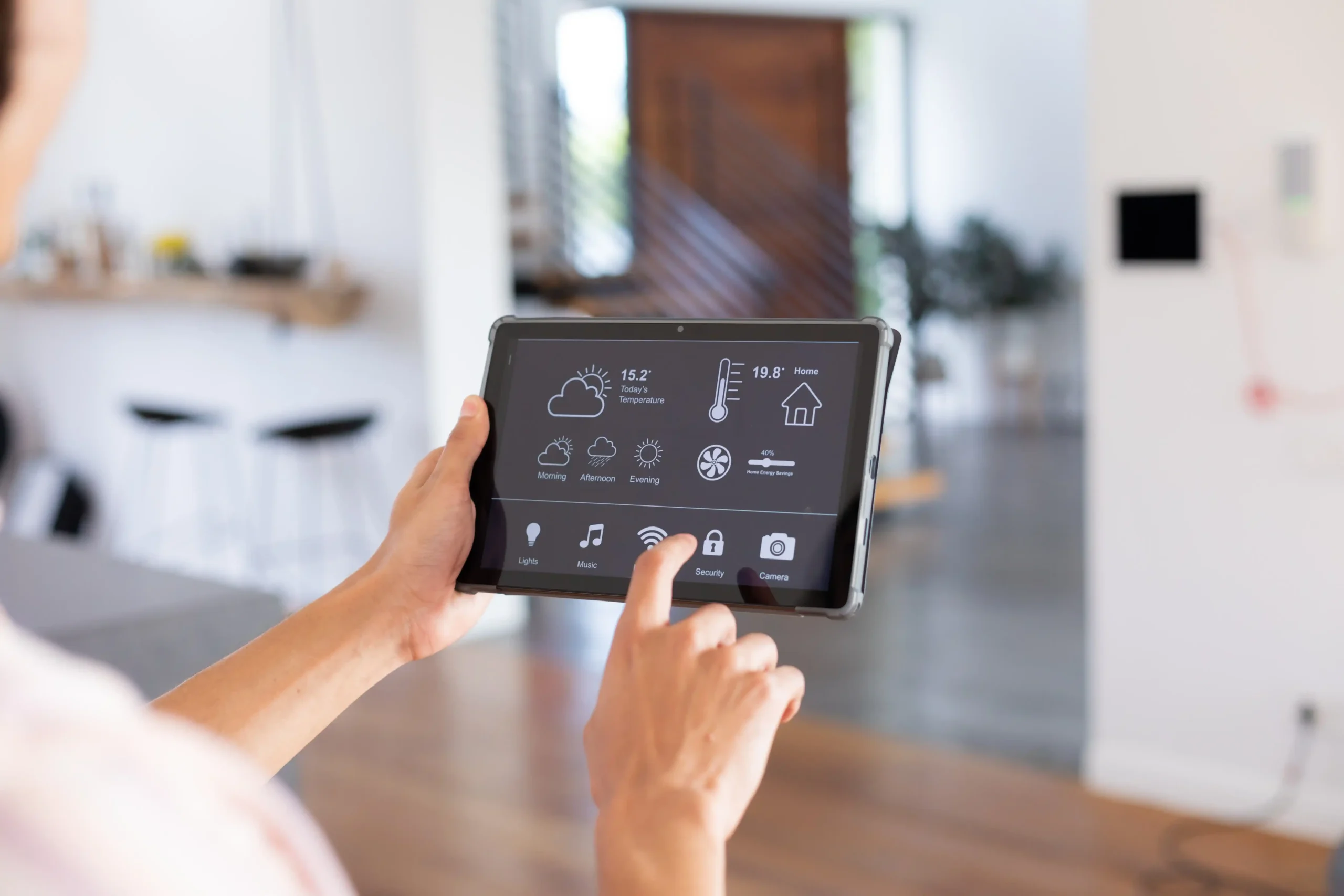
You are going to buy your dream house, and everything looks perfect. But little do you know that there is a water leak hidden behind the drywall. It’s eating away at the structure, but you do not know about it. The seller did some cosmetic repairs, but the root cause remained unaddressed. And, you are bound to bear the brunt of expensive repairs shortly after you move in. Not what you expected from your new house, right?
That’s where smart home technology steps in to change the game.
Studies show that today, more than 8 out of 10 American homes have some kind of smart tech item: from smart TVs and smart doorbells to smart sensors.
As these devices become more prevalent, savvy homeowners and home inspectors have something new on their side: real-time data, deeper insights into a house’s condition before, during, and after an inspection.
In this blog, you’ll discover how smart home tech has the potential to replace the old-fashioned home inspection practices and make them more accurate, efficient, and, at the end of the day, more valuable to both buyers and sellers.
Why Smart Home Technology Matters in Inspections
If you’ve ever been through a home inspection, you know that it is a time-consuming and stressful exercise. The inspector examines the systems and tells you what’s wrong at that point in time. That’s good, but it’s a snapshot, not a movie.
Smart home technology turns that snapshot into a continuous stream of information.
Sensors and connected devices start monitoring the conditions round-the-clock. That means, rather than relying on their own guesswork about whether the basement ever had moisture problems, inspectors can access months of leak sensor alerts.
Instead of waiting for periodic HVAC check-ups, smart thermostats track patterns that help prevent issues or failures from escalating into a nightmare.
In fact, energy monitoring and smart thermostats are proven tools for identifying real issues in HVAC systems and insulation because they highlight anomalies over time, not just on the day of the inspection.
Real Benefits That You Can’t Get From a Checklist Alone
Here are the most significant ways smart home tech improves inspection outcomes:
Early & Proper Detection of Problems
The issue with old-school inspections is that they catch problems at a point in time. Through smart sensors, you do it continuously.
- For a history of water and moisture issues, water leak sensors provide historical data.
- Smart carbon monoxide and smoke detectors record alarms and conditions over time.
- Smart thermostats display temperature and cycling information, highlighting hidden HVAC inefficiencies.
This ongoing awareness of issues can prevent surprises after closing and move-in. It guarantees peace of mind and a smooth living experience.
More Accurate and Comprehensive Reporting
Smart home data provides hard numbers to inspectors, rather than vague guesses or mere speculation. That helps reports to be:
- More precise.
- Data-rich.
- Easy to understand for buyers.
Instead of unclear phrases such as “possible moisture issue,” inspectors can refer to the actual sensor history. This ensures fewer disputes, more clarity, and more assured decision-making by buyers and sellers alike.
Richer Rewards for Inspection Turnaround
In some markets, homes with smart features sell faster and at a higher price. Many customers now prefer homes with integrated smart home features, and demand for them is growing.
Real World Examples That Prove How Powerful Smart Devices Are
Let’s talk about real products, products you most likely have heard of, products that have changed the way we live our lives, already, and of course, now the way we inspect.
Google Nest
Nest’s smart thermostat and Nest Protect (their smart smoke/CO detector) are more than just convenience. These products capture heating patterns and safety events, which can be invaluable during inspections.
Historical thermostat data can be pulled by inspectors to check the HVAC system’s performance across seasons. And features such as early warning from Nest Protect, for instance, provide deeper insights into past safety events.
This type of historical data is something no traditional inspection could have provided on its own.
Ring and Real-Time Alerts
Smart video doorbells, like the Ring, don’t just record visitors. Many offer motion detection history and alerts that can tap into neighborhood risk data. Soon, it will have features that help track wildfire movement at a granular level.
Now, just imagine an inspector verifying how often those outdoor cameras logged movement around entrances; old inspections never had access to this ultra-specific data.
Common Issues & How Smart Tech Helps
Some homeowners are concerned that as inspections become more complex, smart systems will as well. The opposite is true.
- Concern: “Is tech going to make it more difficult to inspect homes?”
No. Using devices that record events over time provides inspectors with a richer dataset. When properly set up, smart home tech makes data collection easy and intuitive, not confusing and difficult.
- Concern: “Is it still necessary to have a professional inspection?”
Absolutely. Smart home technology improves the inspection process. It doesn’t replace human input and expertise. A trained inspector can interpret smart data alongside visual and physical audits to provide the most complete picture possible.
Tech & Human Expertise: The Way Forward for Inspections
Homes are becoming smarter, and the inspection industry is adapting to the new challenges.
Incorporating smart home tech into home inspection outcomes is not just a trend; it is rapidly becoming the norm. Buyers want transparency. Sellers desire smooth closings. Inspectors would like to have reliable data to support their findings.
That’s why leading home inspection companies are scheduling employees to work with smart systems and including these findings in their reports.
Conclusion
Smart home technology is reshaping the way homes are inspected. It provides greater insights, more easily accessible monitoring data, and more easily produced data insights. Resultantly, inspections are more accurate and meaningful now.
For the buyers, it means fewer surprises. For the sellers, it means smoother deals. And for inspectors, better results without additional guesswork.
Gadgets and technology are everywhere. Incorporating smart home-related information into inspection reports is no longer a luxury; it is a powerful advantage.
If you want a home inspection that truly reflects the health and integrity of your property, you need a team that not only knows the old ways of inspections, but also knows the smart tech inside your home.
Top To Bottom Services specializes in comprehensive home inspections that integrate smart home technology insights with expert evaluations. Get peace of mind, a better understanding of your property, and a report that will give you confidence and clarity.